
SEO is Dead — Long Live AI Agent Optimization
For years, SEO meant one thing: please Google’s algorithm. Write keyword-stuffed meta descriptions, chase backlinks, obsess over page speed scores, and pray your blue link shows up on page one. That era is over.
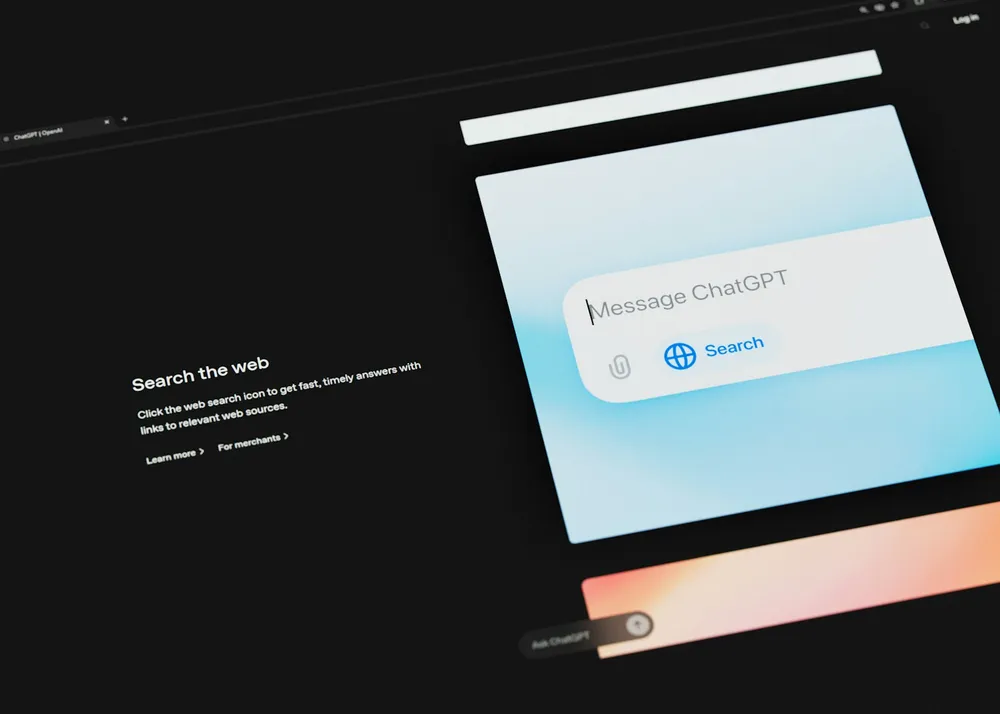
In 2026, AI agents — ChatGPT, Claude, Perplexity, Google’s AI Overviews — are becoming the primary interface between users and information. These agents don’t click blue links. They read your content directly, extract structured answers, and cite sources. Your website’s job is no longer to attract a human click. It’s to be legible to a machine.
“What’s dead is the idea that optimizing for one audience is enough. Every page you ship now has at least three readers: a human, a search crawler, and an AI agent.”
What changed — and why it matters now
The shift isn’t sudden. It’s been brewing since AI search products started generating answers instead of lists of links. But February 2026 marked a definitive milestone: Cloudflare launched Markdown for Agents — a feature that automatically converts your HTML into clean Markdown when an AI bot sends a request with an Accept: text/markdown header.
This is HTTP content negotiation — a decades-old web standard — applied to a brand-new use case. Your server can now serve two versions of the same page: rich HTML for humans, lean Markdown for machines. No duplicate URLs, no extra routes, no black-hat tricks.
- 80% token reduction when serving Markdown vs HTML to AI agents
- 15 tokens for an HTML heading vs 3 tokens in Markdown
- 92% of AI Overview citations already rank in Google’s top 10 (Princeton, 2024)
Understanding content negotiation
Content negotiation is not new. Your browser already uses it every day — when you visit a site on mobile, the server may return a mobile-optimized layout via an Accept header check. The same principle now applies to AI agents.
GET /blog/what-is-seo HTTP/1.1
Host: yourwebsite.com
Accept: text/markdown, text/html;q=0.9
User-Agent: ClaudeBot/1.0

# Cloudflare intercepts this, fetches your HTML,
# converts it to clean Markdown at the edge,
# and returns it — all in real time.
When Google’s bot or Claude’s crawler sends Accept: text/markdown, Cloudflare intercepts the request at its edge network, strips out all the nav bars, JavaScript bundles, CSS classes, and sidebar widgets your human visitors need — and returns a lean, semantically rich Markdown document the AI can actually digest.
The old SEO vs the new reality
Old SEO (2015–2024)
- Keyword density and meta tags
- Backlink farming for domain authority
- Optimizing click-through rates
- Targeting featured snippet “positions”
- HTML-only page structure
- Human visual design as trust signal
AI Agent SEO (2025+)
- Structured, clean Markdown output
- E-E-A-T and genuine topical authority
- Being cited in AI-generated answers
- Answer Engine Optimization (AEO)
- Markdown + HTML content negotiation
- Machine-readable data density
How to optimize your site for AI bots
The good news: if your fundamentals are strong, you’re already 60% there. AI engines draw heavily on the same trust signals as traditional search — fast pages, clear structure, real expertise, authoritative domains. But there are new layers to add.
- Enable Markdown for Agents via Cloudflare — Turn on the zone-level feature. It’s opt-in and handles content negotiation automatically — no code changes required on your origin server.
- Add an
llms.txtfile to your root — A clean Markdown file atyourdomain.com/llms.txtthat outlines your site’s core topics, products, and purpose. Think of it as arobots.txtfor AI agents. - Create an
/aidirectory with pure Markdown — Ruthlessly clean files: no nav, no CTAs, no footer fluff. Just direct, structured answers. - Add structured data (Schema.org) — FAQ, HowTo, and Article schema significantly improve eligibility for AI Overview inclusion.
- “Red-team” your own brand in AI tools — Regularly prompt ChatGPT, Claude, and Perplexity about your brand. If the AI hallucinates your details, you are losing sales without ever noticing.
The cloaking concern
Some SEO professionals — including Google’s John Mueller — have raised the question: is serving different content to bots versus humans a form of cloaking?
Cloudflare’s position: this is standard HTTP content negotiation, not cloaking. The information being served is identical — only the presentation format changes. HTML for browsers, Markdown for machines. The same semantic content is accessible to all. This is no different from serving a mobile layout to phones and a desktop layout to larger screens.
What this means for developers and content creators
If you’re a developer, the message is clear: build with machine legibility in mind from day one. Semantic HTML, clean heading hierarchy, structured data, and a Markdown export path are no longer “nice to haves” — they’re infrastructure.
If you’re a content creator, the shift is more philosophical. The aesthetic beauty of your website is now a secondary concern. What matters is the density and clarity of your information. An ugly page with expert, well-structured content will outperform a gorgeous page with vague prose in every AI citation ranking.
“The brands that win in 2026 are the ones that are easiest for a machine to read.”
The bottom line
Traditional SEO is not dead in the absolute sense — Google still drives enormous traffic, and strong fundamentals still matter. What’s dead is the monoculture of keyword optimization. The game has expanded. You must now satisfy three audiences simultaneously: your human readers, Google’s traditional crawler, and the new generation of AI agents that summarize, cite, and answer on behalf of millions of users.
The developers and creators who understand content negotiation, llms.txt, structured Markdown, and AEO today will own the citations of tomorrow. Everyone else will wonder why their traffic is disappearing.